
"Sound as a conduit of connection" - An interview with Annea Lockwood
One of the most influential composers and environmental sound artists of the last 60 years, Annea Lockwood discusses the return of her 1975 piece, World Rhythms.

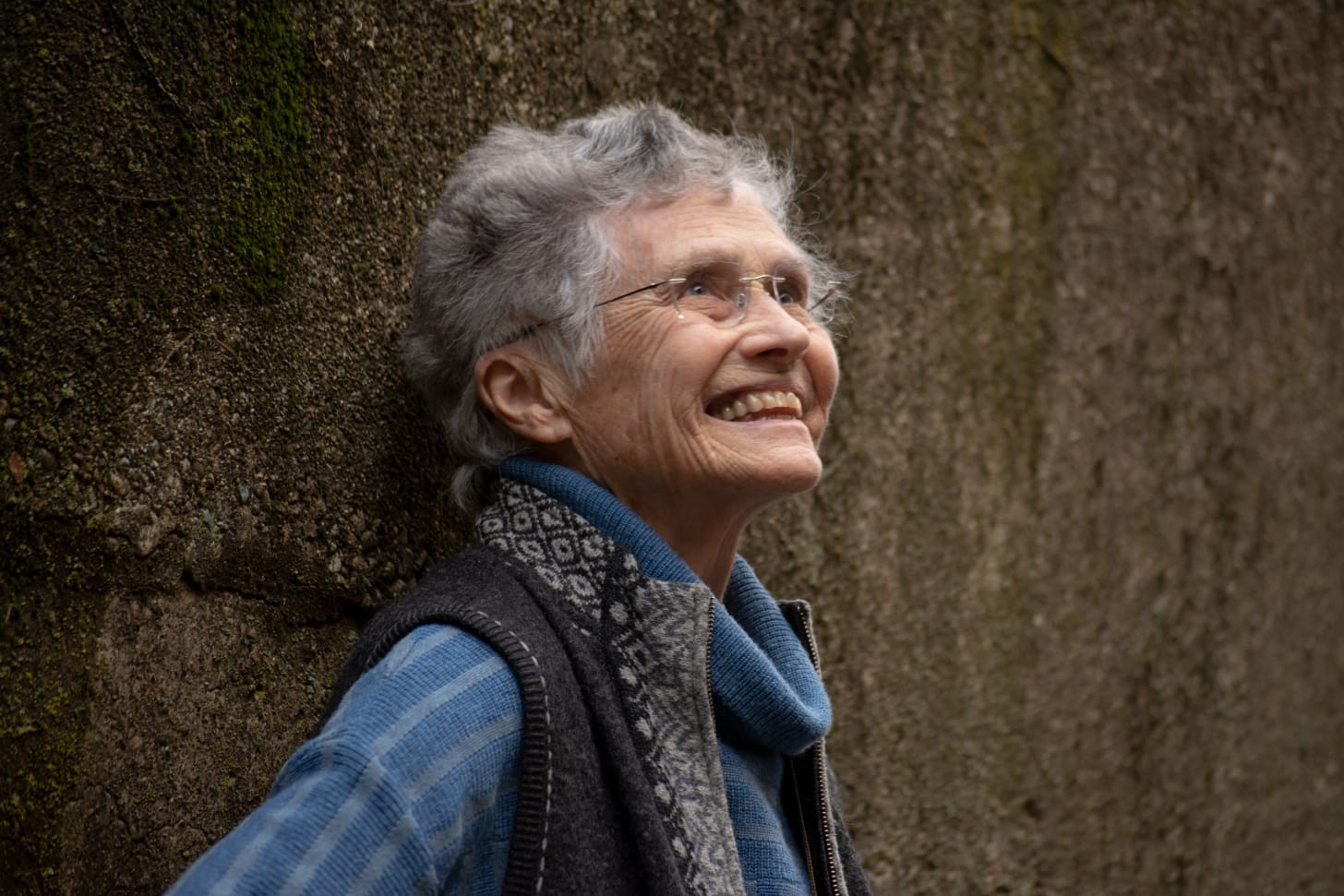
There are few things more gratifying as a researcher than coming across a phrase which articulates something you’ve felt but been unable to put into words. Reading an interview between author Jennifer Lucy Allan and Aotearoa New Zealand-born composer Annea Lockwood in The Quietus a few years ago, I encountered one of those moments. “If you can focus on how you feel in response to hearing something from the environment, and then become aware that you feel connected to it,” Lockwood had said, “you can move into a state where you don’t feel separated from that phenomenon.”
In the simplest terms, I believe active listening offers a means to connection - with other people, with landscapes, environments, processes, politics, natural phenomena. Sensitive to this possibility, Lockwood’s work has been a source of longstanding fascination. When I was editor of The Vinyl Factory, we covered a reissue of her 1970 work Tiger Balm - a hauntingly intimate work built from recordings of feline purrs and growls - which at the time I had few reference points for.
Then, when I was first developing my own field recording practice I was drawn to Lockwood’s river projects, the way sound could map both time and space. It was as if time and water were knitted together in forward motion by a sound of infinite depth and variation.
When artist, composer and Room40 label boss Lawrence English - a previous interviewee on Through Sounds - messaged to say he was revisiting Annea Lockwood’s influential 1975 piece World Rhythms, I leapt at the opportunity to ask her for an interview, and sent over a Google doc with far too many questions to reasonably ask anyone to respond to. When Lockwood replied she had grouped her answers under themes that captured the confluences of my questions. This itself felt like an act of careful listening.
While there are many other things I would have liked to talk to Lockwood about in more detail - not least her work with glass (Glass Concerts) and burning pianos (Piano Transplants) collected in a recent book Piano Decompositions - this exchange focussed on World Rhythms and the different ways it resonates with her listening practice more broadly. Rather than reinsert my questions into the interview, I have decided to keep Lockwood’s groupings, which now arrive like prompts or provocations for thinking about the different ways in which sound can move and connect us.
The origins of World Rhythms.
The piece was sparked by suddenly realising how fast human rhythms are in comparison with many of the great environmental rhythms. I was sitting by Flathead Lake, Montana with my partner Ruth Anderson, and the constantly revving motors of the jet skis were driving us mildly crazy. I began making a mental list of the world’s embedded rhythms, from the calm little waves lapping the shore where we sat, further and further up the scale until I reached tectonic plate shifts. Then I asked myself “What if we could hear all these rhythms as one vast rhythm?”, or as I wrote in the original score “…hearing the world as diverse and co-existing energies within one vast rhythm.” The title, then, is rather literal, or perhaps it is a suggested perspective: these are some of the world’s interpenetrating, generating rhythms. Can you hear them that way?
How do the human-made and natural rhythms relate to….
As we’re learning once again, often from indigenous communities’ insights and practices, these are not separate domains, so I don’t hear them as separate. Human beings are natural too, so in 1975 it seemed clear to me that human breathing – the home ground of our existence, as it were – should be woven together with the other, non-human rhythms. Breath has a wonderfully fluid, varying texture which we interpret instinctively. But I also wanted to add a more subtle bio rhythm, which emerges from the gong part.
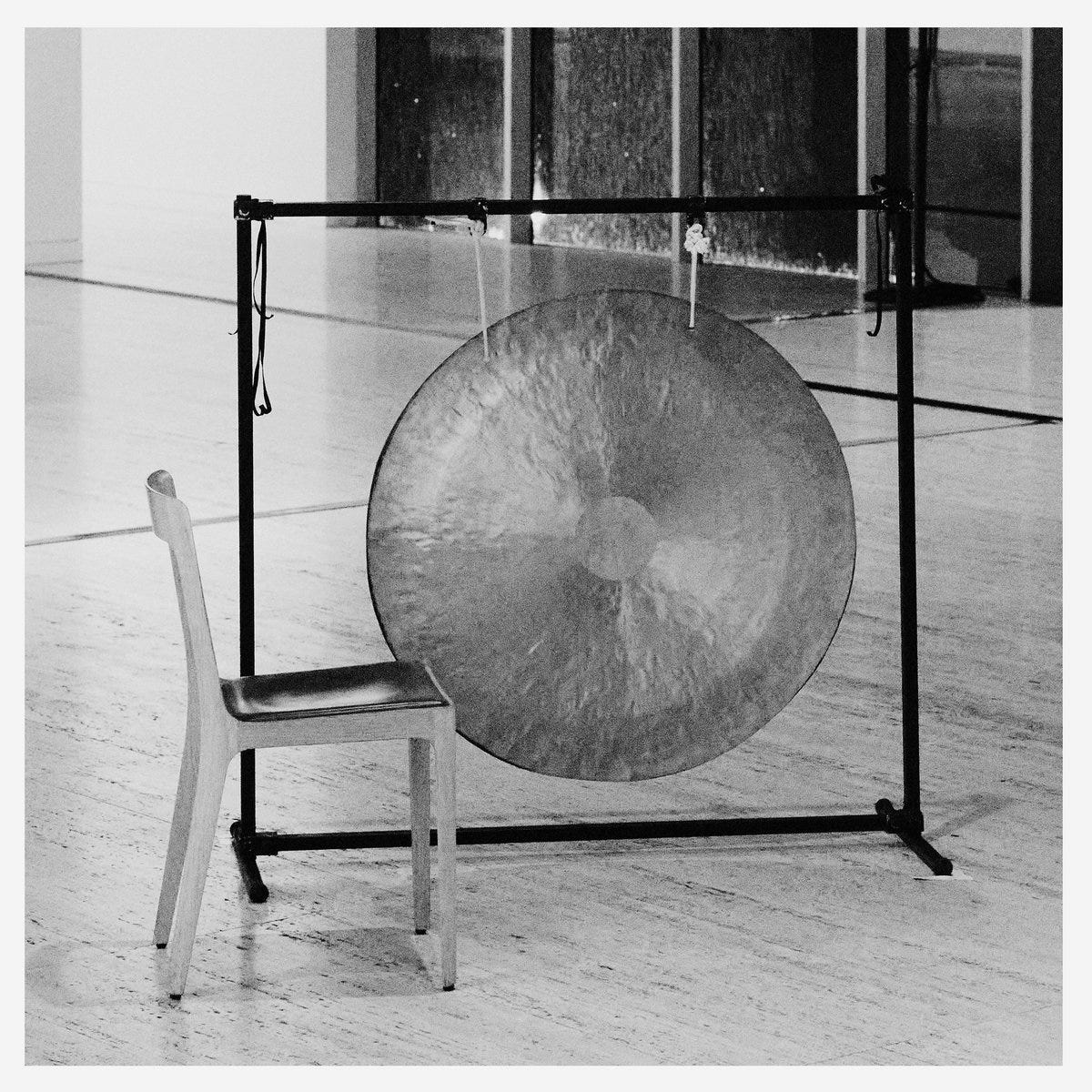
Crucially, the gong score asks the player not “to respond directly to the other sounds…but be conscious primarily of the effects of each gong stroke you make within you, and its duration within your body. Strike again at the end of your body’s faintest perceptible response to the previous stroke.” That is, not to the gong’s resonance itself but rather to the player’s own physical action. This forms an internal feedback cycle - physical action, interior physiological responses, awareness of this inner cycle, or rhythm.
The idea of layering or stratification.
I hear soundscapes as layered: for example in a mixed woodland group of pines, oaks, grasses each has its own distinct timbre and density, responds differently to wind, forming a deliciously layered overall texture, without obscuring or blurring other sounds. Geological layering has always been a good analogy to this aspect of sound for me – complexity within an overall ‘envelope’.
How was World Rhythms presented?
It is a ten channel piece – running for one hour, originally on tape, with each channel dedicated to one of the following sound sources: a pulsar, earthquakes, volcanic activity, geysers and mud pools, rivers, tree frogs, fire with crows, a lake storm, small waves on a lake, human breathing. Each channel connected to a particular monitor with its own spatial location, position and angle. Depending on the nature of the sound source and the acoustics of the space a speaker might be turned upwards facing the ceiling, or facing into a corner, or at an angle to a wall, etc., rarely directly out into the space. The tree frogs were often placed high, in a balcony, for example.
Each channel carries recordings of a particular phenomenon, often repeated to create a one hour track, but the overall sequence of sounds is not pre-composed, it is improvised. There are many possible combinations of sound sources. I selected them for their acoustic interactions, and for the sense of discrete/special ‘spaces’ which they could suggest, trying always to create fresh combinations, although it’s true that some became favourites over time, such as fire and breath. The gong comes and goes at the player’s internal pacing, often with quite long silences between strokes which lengthen as the player becomes increasingly sensitive to her body’s responses. I remember that one player sounded the gong just five times, which was beautiful.
What is it about water…
You ask what it is about the sound of water which continues to draw me. I’m always fascinated by the unpredictable and intersecting rhythms and the internal complexity of the sounds created by water motion, for one thing, but it goes deeper. Sometimes it’s better not to try and define the source of such magnetism - its power to draw one close.
How did this new iteration of World Rhythms come about?
I feel extraordinarily lucky – Lawrence English got in touch with me about reviving the work, and I asked him if he would remaster the ‘feed’ tapes, knowing well what a superb sound engineer and composer he is.
They emerged from that process sounding really good, then an opportunity came to perform it in Sydney at the Volume Festival in 2023, again thanks to Lawrence. I asked him to do the live mixing – something I’d always done myself but I was curious about how someone else would shape it and had long wanted to play the gong part. His mixes are gorgeous, very alive, subtle, and as you hear in the CD release, Vanessa Tomlinson’s gong is timbrally rich and beautifully paced. So the piece has a second life, thanks to Lawrence.
There was never supposed to be a fixed version of the mix, it’s an improvisation and the sounds are not processed during the performance other than equalisation to fit the acoustics of the space. Each performance is different, accordingly. It’s only our practice of recording otherwise live performances which creates templates, as it were.
Focusing on listening as an active practice.
This is a question which either could not have arisen until very recently, or it is an ancient practice, I think. I have always been curious about sound, always listened consciously, probably encouraged early on by my parents, who were sensitive to environmental sound and immersed in music. Like all of us I think, I can find sound intoxicating, and listening to my back yard’s soundscape is deeply calming, especially at dawn and at dusk. That takes immersion, takes time. The longer we listen, (unless in a very noisy environment), the more our hearing threshold is lowered and the more detail we hear, more layers emerge, and the greater is the influence of that stillness, that encompassing concentration.
I think that the increasing interest in sound walks, (thanks, Hildegard Westerkamp), in the very concept of ‘listening’ as a conscious practice, (thanks, Pauline Oliveros), is a clear indication of a turning-point away from ‘maximum absorption at maximum intensity and maximum speed’. Listening as an antidote perhaps. It grounds one.
Sound as material.
I often want the sounds I work with to feel tactile, as if you could stroke their surface with your skin, feel their physical weight, feel someone’s voice in your own throat. This is an extension of my life-long fascination with timbre, with timbral detail, from the early 1960s, when I was writing for instruments through the Glass Concerts and into the work with rivers and environment. For me sound is always very tactile, whatever its origin.
This intersects with the ‘aliveness’ I seek out in non-human sounds, but also in sounds created by the superb musicians with whom I am fortunate to be working currently - Nate Wooley, Claire Chase, Yarn/Wire, Xenia Pestova Bennet. It’s about fine details, the interplay of frequencies and intensity, a sound’s duration, (letting it live out its life and how it changes through that time), its internal rhythms and their interplay. Water is particularly rich in these ways, hence a good part of its magnetism for me. And it is why I like to record up close when outside.
Sound as a conduit of connection.
We seem to respond with great sensitivity to changes in atmospheric pressure, in light, temperature, and so many other aspects of the ambient environment, without always being aware of the way we adapt physiologically. Nevertheless, this is connection and it is often involuntary. Similarly with sound vibrations. From time to time I can listen so intently to the sound vibrations generated by, say, a passing barge on the Danube, that I feel it is passing through my body, as indeed those sound waves are. I propose that this is interaction - a form of connection or, better, a conduit of connection, my body registering what my mind presents as non-separation from environment.
This is deeply important to me because it is harder to disturb or damage something with which you feel that sort of connection. Caring can arise, and out of that conservation.
What sounds are exciting to me at the moment?
The house sparrows above my kitchen talking back and forth in the early morning, so alive! Claire Chase creating guttural low sounds – extensions of her body which you’d never dream could come through either a flute or a body. Our recordings of the Elwha River tearing through a gorge once blocked by a dam, now freed – now that’s complex, layers upon layers! The Elwha is a short river in Washington State, the US, from which two dams were removed by 2014. In 2025 Claire and I co-composed ‘Elwha!’, a concert work for seven flutes and field recordings, in celebration of the river’s ongoing recovery.
Right now I am sitting in my back yard, it’s mid-morning and just windy enough to set the trees in motion, so I’m hearing soft but dense sweeps of leaves, backgrounding local traffic’s drone, soft clinks from a slate mobile Ruth made years ago, distant woodpecker to my left, another bird to the right, small plane’s complex drone passing through the soundscape. I feel energised.
Annea Lockwood’s World Rhythms is out now on Room40.
Absolutely wonderful, Anton. There is so much in here to think about. Thank you!
Hola , Muy Buen Artículo. Annea Lockwood Es Una Leyenda De Las Grabaciones De Campo Su Obra Es inabarcable. Gracias Al Sello Room40 , Dirigido Por El Gran Músico Lawrence English , Esta Recuperando Poco A Poco Su Obra. Por Cierto Hoy Es El Cumpleaños De Lawrence English , 50 Años , Que Siga Cumpliendo Muchos Más. Un Saludo